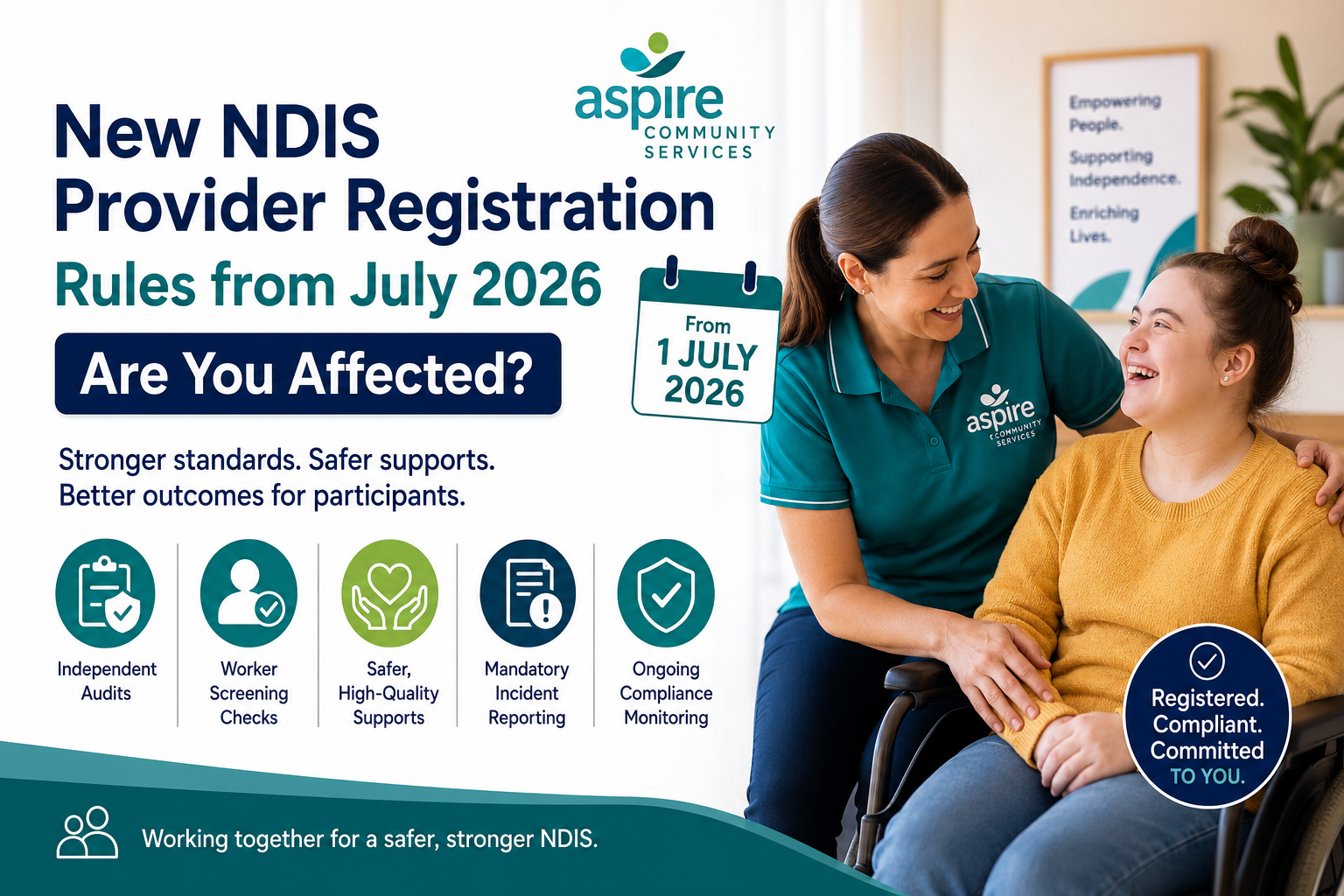
If you’ve been anywhere near the NDIS space in the last few months, you’ve probably heard some version of this sentence: “Provider registration is changing.” And honestly, it’s not just background noise this time – 1 July 2026 marked one of the biggest shifts to how NDIS providers are regulated since the scheme first launched.
For participants, families, support coordinators and even providers themselves, the natural question is simple: does this actually affect me? In most cases, yes – in some way or another. Let’s break down exactly what’s changed, who needs to act, and what it means for the quality and safety of the support you or your loved one receive.
Before we get into what’s new, it helps to understand the old system. For most of the NDIS’s history, providers fell into two broad camps:
This flexibility suited a lot of people, but it also left a gap. Unregistered providers weren’t required to report serious incidents the same way, weren’t audited, and operated largely outside the Commission’s line of sight. That gap is exactly what the new rules are designed to close.
From 1 July 2026, mandatory registration became a legal requirement for two specific categories of NDIS providers:
It’s worth noting that some support types were already required to be registered long before this change – think Specialist Disability Accommodation (SDA), Plan Management, Specialist Behaviour Support, and any support involving regulated restrictive practices. What’s new is that SIL and platform-based services have now been added to that list, and there’s real talk of personal care and other daily living supports being brought in over the next couple of years as the rollout continues through to 2030.
The reasoning behind the change isn’t really a mystery. With such a large share of the NDIS market operating without formal oversight, there was no consistent way to check whether high-risk supports, like SIL, where a person’s day-to-day safety and dignity are directly in someone else’s hands, were being delivered to a proper standard.
Registration brings a few things to the table that unregistered arrangements simply can’t guarantee:
In short, it’s less about red tape for its own sake and more about making sure the people delivering the most sensitive, hands-on support are held to a nationally consistent standard.
If you’re an NDIS participant or family member: If you currently receive Supported Independent Living supports, or you use an app-based platform to book support workers, it’s worth checking whether that provider has registered – or is actively going through the registration process. Providers who don’t register are legally unable to continue delivering these specific supports, which means a sudden gap in your care isn’t something you want to discover at the last minute.
If you’re a support coordinator: Part of your role right now is likely reviewing client service agreements and flagging any provider that hasn’t started the registration transition. This is especially important for SIL arrangements, since continuity of accommodation-based support is hard to replace quickly.
If you’re a provider: The registration process typically takes several months from application to approval, including audits and worker screening clearances. If you’re delivering SIL or platform-based support and haven’t started this process, the honest advice is: start now rather than later. Operating in these categories without registration after the deadline isn’t just a compliance issue – it can mean an inability to legally continue delivering the service at all.
For participants and families, this is genuinely good news in the long run. A registered SIL or accommodation provider has already been through independent scrutiny – audits, practice standard checks, worker screening, before they ever start supporting you. That’s a very different starting point to an arrangement with no formal oversight at all.
If you’re currently exploring Supported Independent Living (SIL) options, this is a good moment to ask any provider directly: “Are you registered with the NDIS Quality and Safeguards Commission, and what does that cover?” A provider that can answer that clearly and confidently is usually one that’s taken compliance seriously well before it became mandatory.
It’s also a good time to check in with your NDIS Support Coordination team about your current service agreements, particularly if any of your supports fall into the newly regulated categories. A support coordinator can help you understand whether your existing arrangements need to change and what your options are if a provider isn’t planning to register.
At Aspire Community Services, registration and compliance aren’t things we’re scrambling to catch up on, they’ve always been part of how we operate. As a registered NDIS provider, our support across SIL, core supports, and accommodation are already aligned with the practice standards these new rules are designed to enforce. If you’re a participant currently weighing up your options because your existing provider hasn’t registered, our team can walk you through what a compliant, audited support arrangement actually looks like day-to-day.
If you’d like to talk through your current support, or you’re not sure whether your provider is affected by these changes, you can always get in touch with our team, we’re happy to answer questions even if you’re not yet an Aspire participant.
FAQ
What is NDIS mandatory provider registration?
It’s a legal requirement for certain categories of NDIS providers to register with the NDIS Quality and Safeguards Commission, meet the NDIS Practice Standards, undergo independent audits, and complete worker screening checks before they can legally deliver those specific supports.
Which providers need to register from 1 July 2026?
Supported Independent Living (SIL) providers and platform providers (app or website-based services connecting participants with support workers) are the two categories affected from this date. Other categories, including Specialist Disability Accommodation and Plan Management, were already required to register beforehand.
Does this affect me if I’m plan-managed or self-managed?
Yes, Unlike some previous rules, this registration requirement applies to SIL providers regardless of how a participant manages their NDIS plan.
What happens if my current provider doesn’t register?
An unregistered provider will not be legally able to continue delivering SIL or platform-based support after the deadline. It’s worth checking with your provider directly about their registration status and timeline, and speaking with your support coordinator about backup options.
Is personal care support included in these changes?
Not yet, as of the 1 July 2026 changes, but there has been strong indication from the government that personal care and other daily living supports may be added to the mandatory registration list in future phases through to 2030.
How can I check if a provider is registered?
You can search for registered NDIS providers directly through the NDIS Commission’s public provider register, or simply ask the provider to confirm their registration status and share relevant documentation.
Does registration guarantee good quality support?
It’s not an absolute guarantee, but it does mean the provider has been independently audited against national practice standards and has undergone worker screening, a meaningfully higher bar than no oversight at all.